Some notes about userrepository performance with the new provider

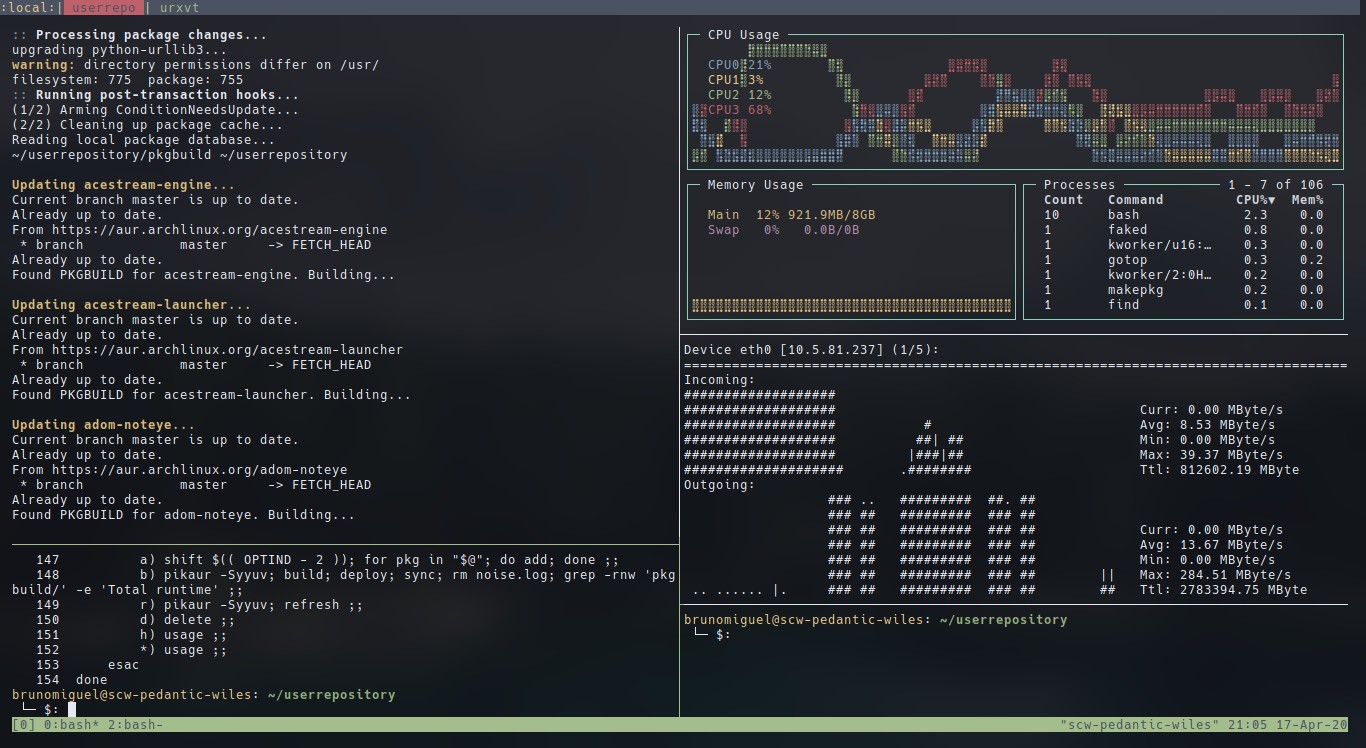
In the previous post, I wrote about how I changed the virtual machine provider from Scaleway to Hetzner. In the days following the transition, I timed how much it took to build all the packages and sync them to the webserver, so I could compare the new provider with the previous one. The specs are very similar: 4 vCPUs and 8GB of RAM. There is one difference, however: with Scaleway, the vCPUs were some Intel low-end ones (although they’ve upgraded to AMD EPYC very recently) and with Hetzer they are AMD EPYC. And what a difference this makes. ...
04 de junho de 2020

Userrepository.eu is back (in beta)

After a small forced hiatus, userrepository.eu is back. The Covid-19 pandemic made a hit in my income and the wife’s income, so I had to temporarily suspend non-priority expenses. During this period, I had time to consider a few things about the future of the project and decided to change the provider from Scaleway to Hetzner, mostly because the Arch image they’re using is essentially abandonware. If you’re reading this, you’ll probably know that Arch Linux changed the default package compression to ZSTD. In order to update or install any package, you’ll need a pacman version that supports this compression and up-to-date libraries. These requirements aren’t met in older Arch images, like the one used by Scaleway, so the only two solutions were installing another distribution, chrooting into it and hack an Arch install (the solution presented to me by Scaleway support) or change provider. The second option was the less time-consuming one. ...

01 de junho de 2020

Improving boot time

Today, I’ve decided to try and improve the boot time of my laptop, running EndeavourOS. There was no special reason for it other than “Why not?”. The first thing I made was disabling or masking the following systemd services: systemd-resolved disabled tlp disabled NetworkManager-wait-online disabled lvm2-monitor masked org.cups.cupsd disabled packagekit masked bluetooth disabled (I rarely use the laptop’s bluetooth) blueman-mechanism disabled With this, I was able to save a few milliseconds and decrease the enabled systemd units to 15, but the impact was negligible. ...

30 de abril de 2020

Como resolver problemas de ruído com o microfone interno em Linux

Quer no meu portátil, quer no da esposa, temos um problema irritante com o microfone de cada equipamento quando usamos o Jitsi Meet, Skype, Messenger e outras aplicações do género. A situação é a seguinte: quando o volume do micro está baixo, não se ouve nada; aumentando, só se ouve distorção que dá uma dor de cabeça horrível. Andei uns dias de volta do alsa ou do pulseaudio, porque pensava que o problema era aí, até que descobri a solução no askubuntu. Resumidamente, basta instalar o pavucontrol, ir aos dispositivos de entrada, destrancar os canais do microfone interno e colocar o canal direito a 0. ...

23 de abril de 2020

Debugging build times

Lately, the repository has been taking +10 hours to compile all the packages. I think that’s a lot for a little more than 250 packages, most of them small utilities and/or _-bin_ files from AUR, built in a DEV1-L (4 cores, 8 Gb RAM) virtual machine from Scaleway. After investigating the matter, I found out that 12 of the packages took four hours and sixteen minutes to build. Pkg Hours Minutes ./pueue/makepkg.log 0 12 ./ffsend/makepkg.log 0 15 ./joplin/makepkg.log 0 15 ./bandwhich/makepkg.log 0 16 ./session-desktop/makepkg.log 0 17 ./mindforger/makepkg.log 0 17 ./giada-git/makepkg.log 0 17 ./brackets/makepkg.log 0 21 ./newbreeze-git/makepkg.log 0 24 ./falkon-git/makepkg.log 0 24 ./newsflash-git/makepkg.log 0 31 ./firefox-kde-opensuse/makepkg.log 0 47 256 I decided to give it a go at reducing the packages build time. The first set of changes I made were: ...

17 de abril de 2020

From F@h to Boinc

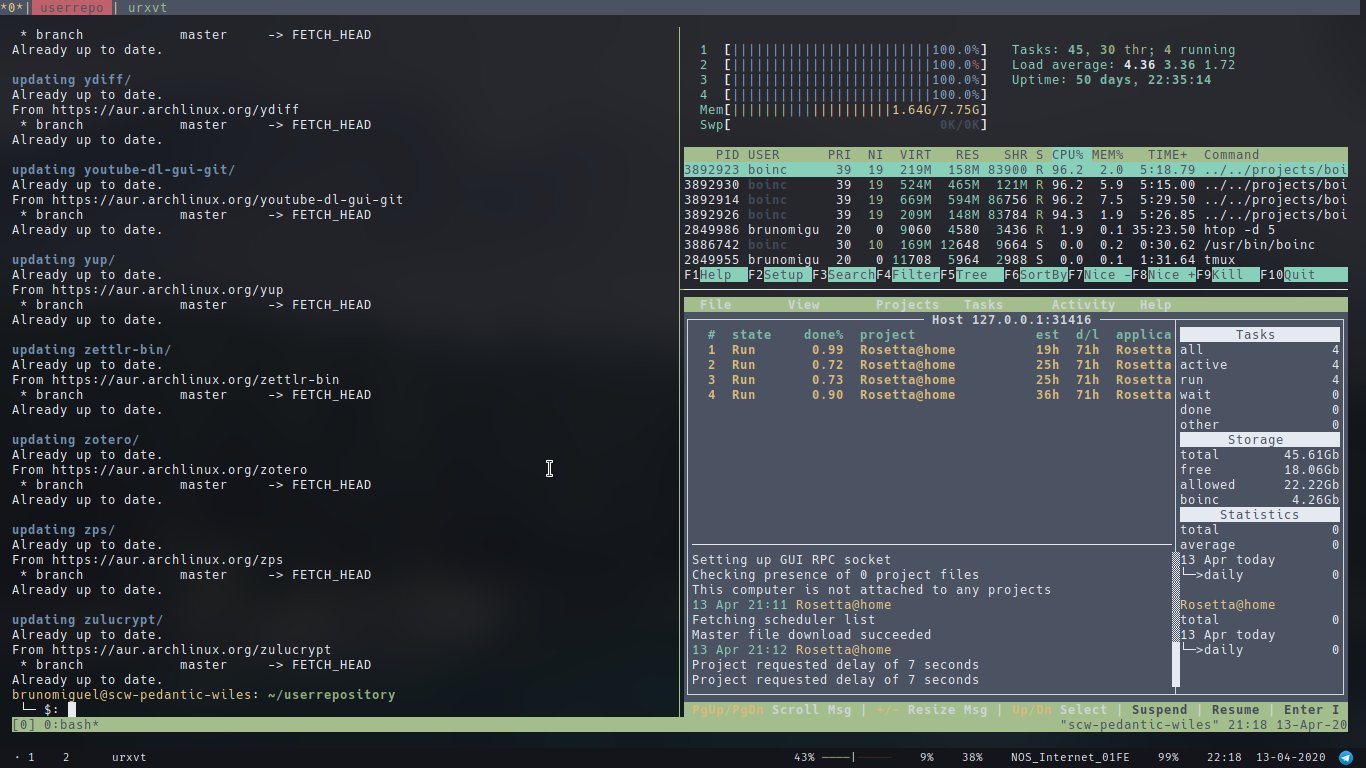
In the start of July 2019, I wrote about using the spare CPU cycles in my VPS to contribute to Folding@home (F@h). Since then, when not building packages for Arch Linux, the virtual machine has been crushing numbers as a peer in this project. Today, I’ve switched to Boinc with the Rosetta@home project. This change was due to the fact that Boinc is a free software application, whereas F@h is proprietary. I’m still contributing to fight COVID-19 (I chose the Rosetta@home project because of this), I’ve just changed the application I’m using. ...

13 de abril de 2020

Suporte para o Cartão de Cidadão no userrepository.eu

Ainda hoje, no máximo amanhã, devo disponibilizar a aplicação para autenticação nas plataformas do Estado com o Cartão de Cidadão. Assim que estiver disponível, basta usares o comando sudo pacman -Syyuv autenticacao-gov-pt para ser feita a instalação. Não te esqueças de adicionar o repositório primeiro, caso ainda não o tenhas feito. Fica atent@.

07 de abril de 2020

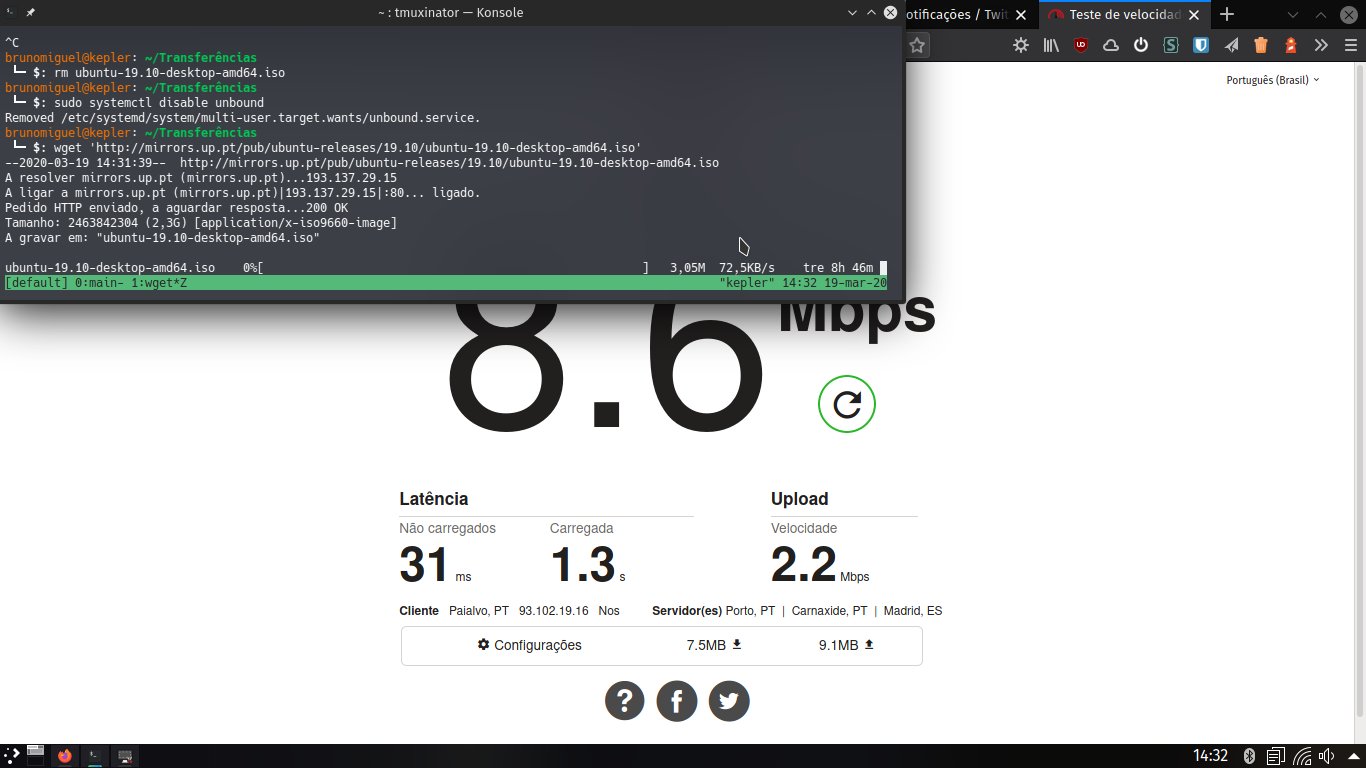
A história de uma ligação à internet que ficou manca das duas pernas, com um braço ao peito e com o outro amputado

Sou cliente NOS há algum tempo, com um serviço (tarifário de 20MB) que funciona pela rede móvel mas que é comercializado pela operadora como fixo. Recentemente até refidelizei o meu contrato porque, apesar de algumas vezes aplicarem traffic shaping, estava relativamente satisfeito. Vá, estava mais ou menos satisfeito, mas aplicaram-me um desconto de 20% e lá acabei por refidelizar o contrato. No final de Janeiro, ainda mal se falava da COVID-19, fiquei de baixa por questões de saúde que não estão relacionadas com esta pandemia. Ao passar mais tempo em casa, é natural que use mais a Internet, até porque subscrevo Netflix e Meo Go, e estes serviços têm sido a minha companhia nas muitas noites e dias sem dormir. ...

19 de março de 2020

How to set up a simple Wireguard VPN

Install Wireguard I’m using a Debian virtual machine for the server. In Debian 10, you’ll need to install the following two packages: apt install wireguard-dkms wireguard-tools Set up keys First, navigate to /etc/wireguard (If not created, run mkdir /etc/wireguard as root) and then run the following commands as root: wg genkey | tee laptop-private.key | wg pubkey > laptop-public.key wg genkey | tee server-private.key | wg pubkey > server-public.key ...

15 de fevereiro de 2020

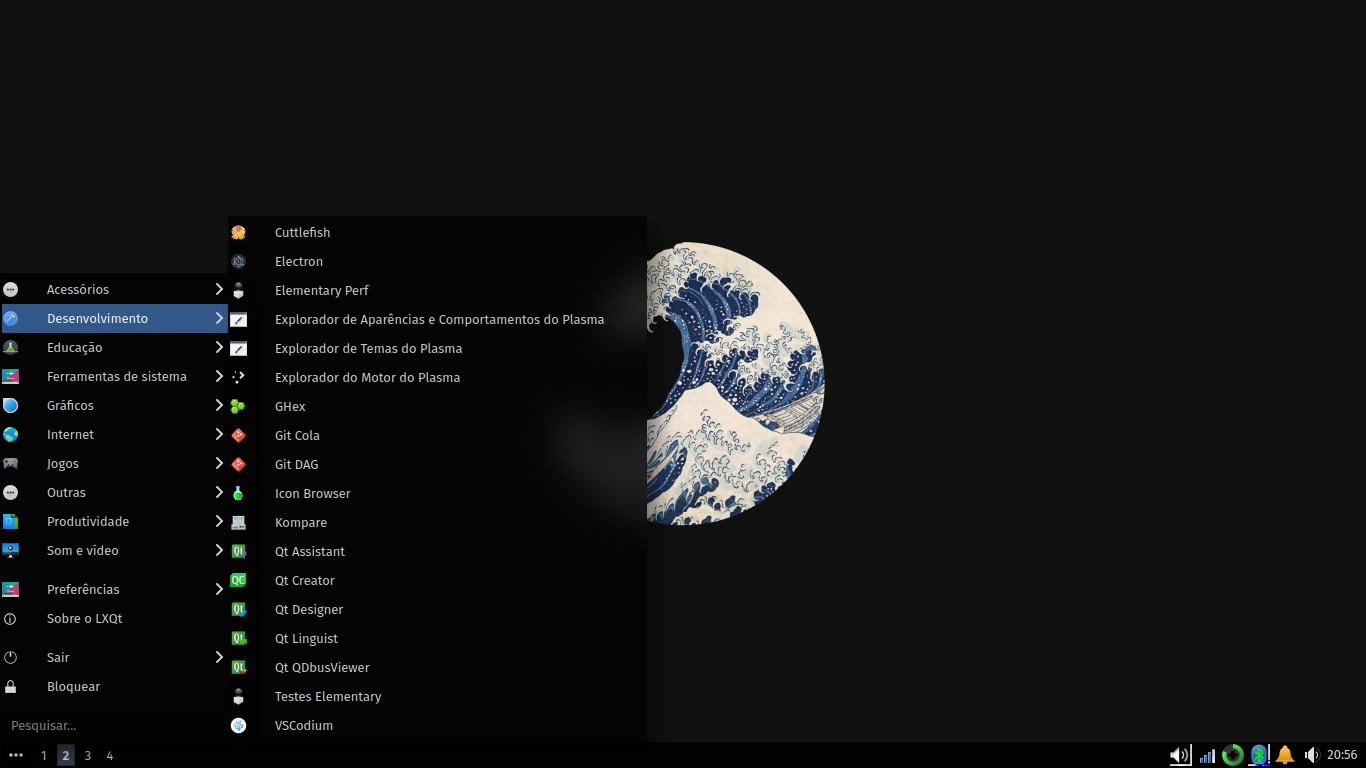
LXQT

In the last couple of months, I’ve been using LXQT as an alternative to Plasma Desktop. Coupled with compton_tryone for the blur bling, a nice dark and transparent theme, and some GTK and Kvantum dark themes to match, it’s actually a great desktop environment.

05 de fevereiro de 2020